
How Does the Du Bois and Washington Feud Impact Education Ideas?
Quick Answer
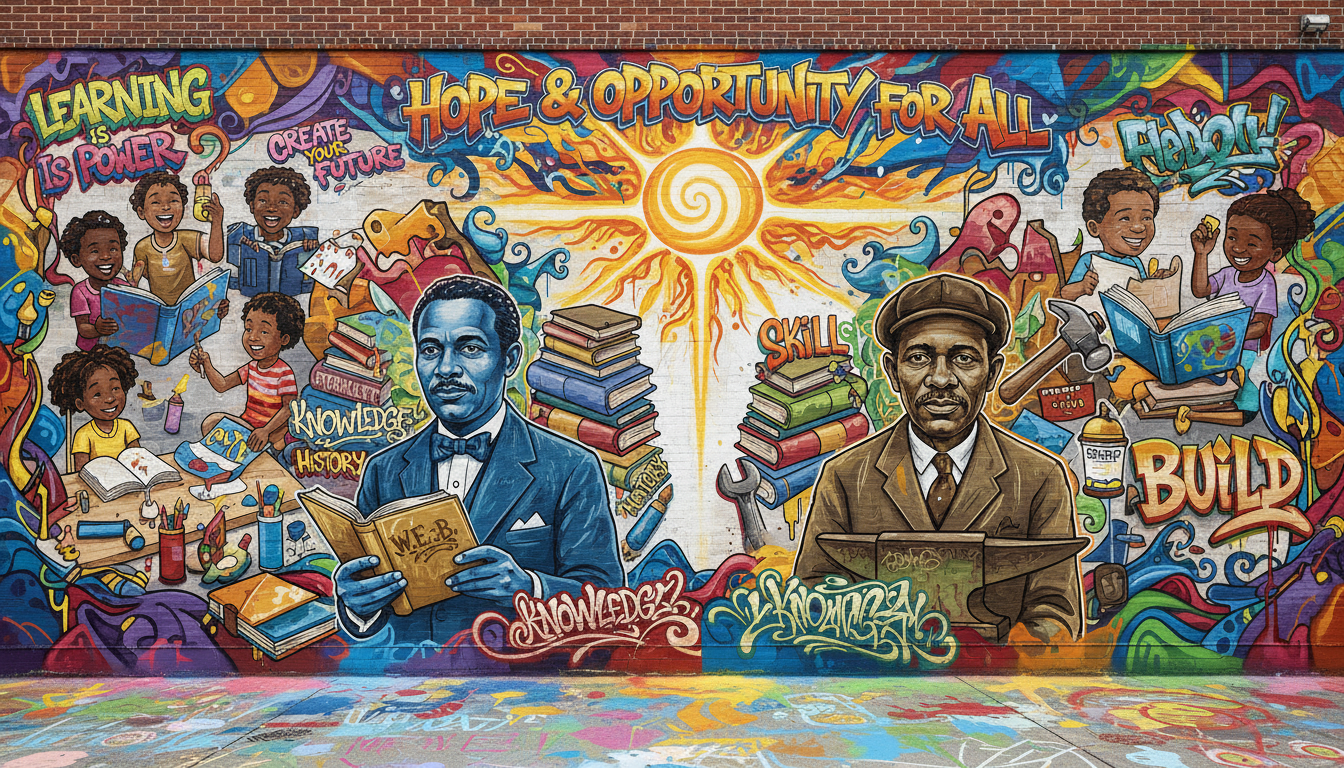
The feud between W.E.B. Du Bois and Booker T. Washington highlights contrasting views on black education. This conflict contextualizes Anna Julia Cooper's advocacy for equal education, illustrating how her approach aligned with Du Bois' vision for rigorous academic standards.
The article discusses the significant feud between W.E.B. Du Bois and Booker T. Washington, two prominent African American leaders with differing philosophies regarding education and racial uplift. Understanding this conflict is crucial to grasping Anna Julia Cooper's contributions to education, particularly for black children. Cooper’s insistence on a rigorous academic curriculum for her students reflects a commitment to equal educational opportunities, which aligns more closely with Du Bois’ vision than Washington's.
Du Bois argued for higher education and professional training for African Americans, believing that a 'Talented Tenth' would lead the way toward social change and racial equality. In contrast, Washington advocated for vocational training, emphasizing practical skills that would provide immediate economic benefits but potentially limit broader intellectual development. This fundamental disagreement sheds light on the various approaches within the African American community during a time of intense racial discrimination.
By including this feud, the author illustrates that even among black leaders, there were significant disagreements regarding the best strategies to uplift the community. Cooper’s work, which aimed to provide academic rigor for her students, can be seen as a direct response to the limitations of Washington's approach. For instance, her curriculum was designed to empower students with the knowledge and skills necessary to compete on equal footing with their white counterparts, a notion that resonates with Du Bois’ call for high academic standards.
The article further emphasizes that Cooper’s choices were not without controversy. By pushing for an academically focused curriculum, she faced criticism from those who believed vocational training was more pragmatic given the socio-economic realities of her time. This context underscores the importance of Cooper’s work in advocating for an education that was not just about survival but about thriving and achieving equality.
Ultimately, the inclusion of the Du Bois-Washington feud in the article serves to illuminate the complexity of educational philosophy among African American leaders. It helps readers appreciate why Cooper’s educational practices were not only progressive but also essential in the broader struggle for civil rights and equality. Understanding these historical debates encourages contemporary discussions about educational equity and the ongoing challenges faced by marginalized communities. Cooper's legacy, therefore, is not just about her immediate impact on her students but also about her role in a larger narrative of fighting for equal access to quality education for all children, regardless of their race.
In summary, the author's discussion of the feud between Du Bois and Washington is integral to understanding Anna Julia Cooper's approach to education. It provides a rich context that highlights her commitment to equal educational opportunities and the significance of her work in the fight for civil rights, making it clear that education was, and remains, a powerful tool for social change.
Was this answer helpful?